|
Captain Christopher Loyd MC
Late Coldstream Guards
by Colonel D D S A Vandeleur
formerly Coldstream Guards
|
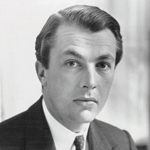 Larch (as he was known) Loyd, who died on 14th June 2013, was born on 1st June 1923 on the family estate in Oxfordshire, the youngest of six children. He had two elder brothers, one died in childhood and the other, John, was wounded at Tobruk whilst serving with the Coldstream, invalided home and died from his wounds in October 1943. By that time Larch had left Eton and Cambridge and joined the Coldstream and was serving in Italy with the 3rd Battalion, having been dissuaded by his father from joining the RAF. Larch (as he was known) Loyd, who died on 14th June 2013, was born on 1st June 1923 on the family estate in Oxfordshire, the youngest of six children. He had two elder brothers, one died in childhood and the other, John, was wounded at Tobruk whilst serving with the Coldstream, invalided home and died from his wounds in October 1943. By that time Larch had left Eton and Cambridge and joined the Coldstream and was serving in Italy with the 3rd Battalion, having been dissuaded by his father from joining the RAF.
John’s death was a bitter blow for the Loyd family and this took its toll on his father’s health, who was to die unexpectedly in 1944. Larch was the family’s hope for the future, but he was commanding a platoon in the 3rd Battalion, at a time when life expectancy of infantry platoon commanders was not high. However, he distinguished himself, being awarded an immediate MC in October 1943. He was holding a position facing the Germans on Monte Grande north of the river Volturno. On the night of 15th October 1944, whilst leading a reconnaissance patrol, he came under fire from four different machine gun positions. The following morning, with pressure building to break through the German positions, he led his platoon in an attack, charging across open ground in the face of heavy fire from the German positions.
His platoon suffered heavy casualties and he was finally compelled to take cover some 30 yards from the machine guns. He held this position for two hours by sniping and throwing grenades until he was ordered by his company commander to withdraw. He brought back the remains of his platoon by most skilful use of the available cover and was restrained from going forward again himself to recover the wounded when directly forbidden to do so.
He returned in March 1945, was posted to the Training Battalion and released from military service in June 1946 in the honorary rank of captain. He joined the Wiltshire Yeomanry from 1950 to 1956, feeling the obligation to set an example to others in volunteering. This was typical of Larch, who had now to take on the leadership and management of the Lockinge estate. He knew that he had to tackle some major problems and, like all landowners at that time, faced some very considerable post-war challenges.
First there was the house, requiring fifty servants to keep it running at vast expense. He had it demolished, which was a difficult but visionary step, and moved into more modest accommodation. A new chapter opened in Larch’s life - one of landowner, with the associated work of farming, forestry, and estate management. He also took on a vast array of civic responsibilities and gave generously of his time to all manner of charitable enterprises, including acting as President of the Oxford and Reading Branch of the Coldstream Guards Association. He was much admired and respected by the membership. He was a notable benefactor to the Regiment.
He met his future wife, Joanna Smith Bingham, at a racecourse and they were married on 17th December 1957. Three children were born at Lockinge and a new era of family life began.
Along with the estate, Larch had inherited an important art collection, started by Lord Wantage, which became a passion of his own and to which he added. When there was no further room on the walls of his house for paintings, he moved on to sculpture.
Larch pioneered the conversion of disused farm buildings for alternative purposes well ahead of his time, which has kept the villages of Ardington and Lockinge alive and thriving into the 21st century.
He handed over the running of the estate in 1985 to Thomas, enabling him to pursue his twin passions of hunting and racing. He was chairman of the Old Berkshire hunt from 1951 to 1996. He established his own stud and point-to-point course on the estate and was a director of Newbury racecourse.
The Lockinge Stakes, a Group 1 race, first run at Newbury in 1958, continues to this day.
He also served for many years as a JP. He was a regular church-goer, with a strong Christian faith, which shaped his life. Larch is survived by Thomas, Harriet and James. |
|